 844.883.2483
Common Real Estate Photography Mistakes That Hurt Property Listings
In today’s digital real estate market, buyers and renters often decide whether a property is worth viewing within seconds of seeing its online listing. While location, price, and features all matter, the quality of the property’s photos frequently determines whether someone continues exploring or moves on to another listing.
Unfortunately, many agents, homeowners, property managers, and investors unknowingly make photography mistakes that reduce buyer interest and weaken marketing performance. Understanding these common real estate photography mistakes can help create stronger listings, generate more enquiries, and improve the chances of selling or renting a property faster.
Why Poor Photography Costs Agents and Sellers Opportunities
Real estate listings compete against hundreds or even thousands of other properties online. Buyers typically scan search results quickly and focus on listings that immediately capture their attention.
When photographs fail to showcase a property’s strengths, several problems can occur:
- Fewer clicks on listing portals
- Reduced engagement with marketing campaigns
- Lower enquiry volumes
- Longer time on market
- Missed opportunities with qualified buyers
Many real estate professionals underestimate how strongly photography influences buyer behavior. A well-photographed property often creates a stronger emotional connection before a viewing ever takes place.
As discussed in this guide on how to sell or rent faster with real estate photography?, high-quality visuals are often one of the most influential factors in generating early interest.
The Most Common Real Estate Photography Mistakes
Several photography mistakes appear repeatedly across property listings. Fortunately, most can be avoided with proper planning and professional execution.
Photographing Cluttered Spaces
One of the biggest mistakes is photographing rooms that have not been properly prepared.
Visible clutter distracts viewers and makes spaces appear smaller. Personal items, excessive furniture, and unnecessary decorations can prevent buyers from imagining themselves in the home.
Using Incorrect Camera Angles
Poor camera positioning can distort room dimensions and create misleading impressions.
Photos taken too high, too low, or from corners that hide important features often fail to represent the property accurately.
Including Too Few Images
Some listings provide only a handful of photos. Buyers want a complete understanding of the property before scheduling a visit.
Insufficient imagery can create uncertainty and reduce buyer confidence.
Inconsistent Image Quality
Mixing professionally edited images with low-quality snapshots creates an unprofessional appearance and weakens the overall presentation.
Overediting Photos
Editing should enhance photographs while maintaining realism. Excessive color adjustments, unrealistic skies, or heavily altered interiors can damage credibility when buyers visit the property in person.
How Lighting Problems Affect Property Marketing
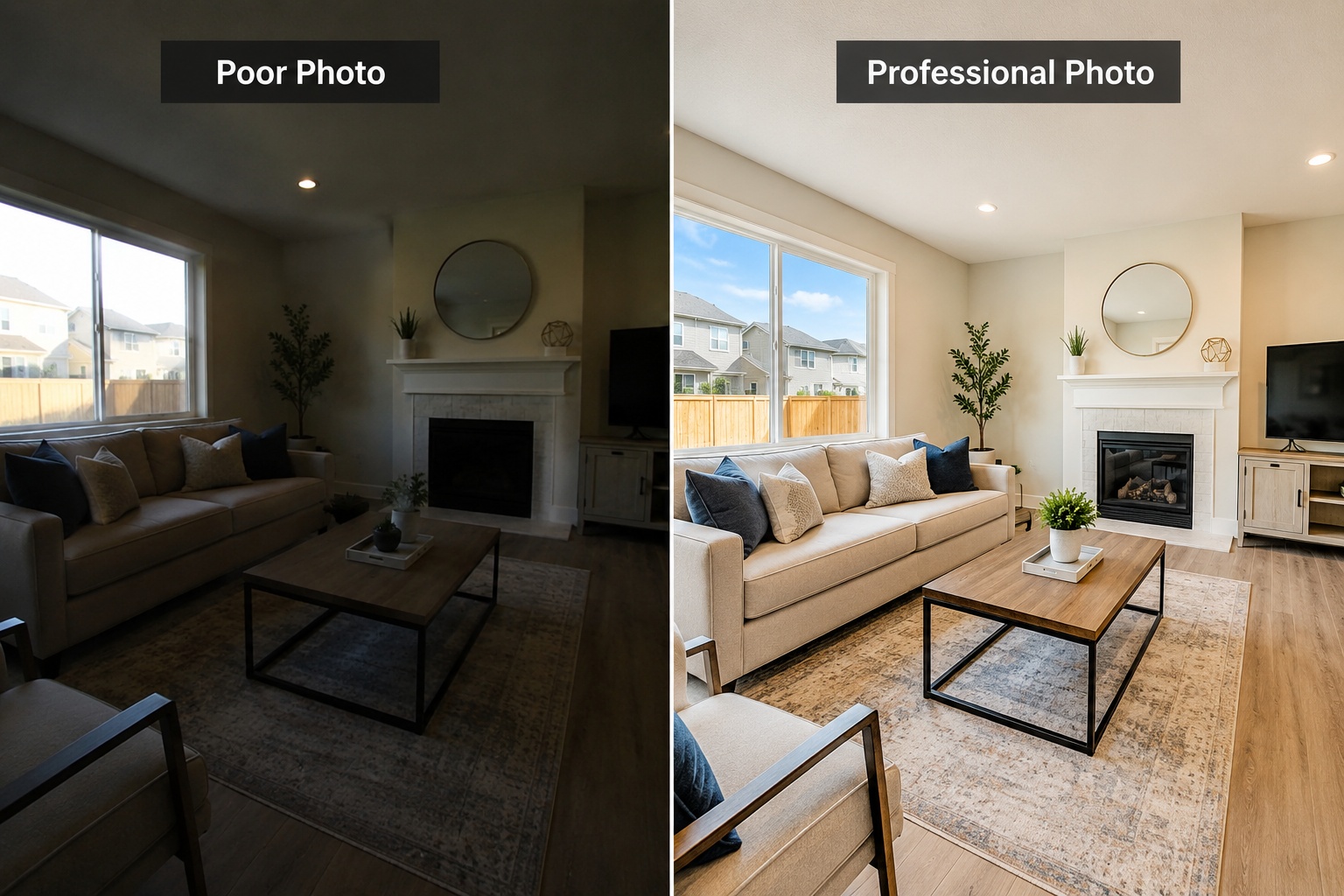
Lighting is one of the most important elements of successful real estate photography.
Poor lighting can make even attractive homes appear uninviting.
Common lighting mistakes include:
- Photographing rooms that are too dark
- Creating harsh shadows
- Allowing windows to become overexposed
- Mixing different color temperatures
- Relying solely on artificial lighting
Professional photographers understand how to balance natural and interior light to create bright, welcoming images.
Proper lighting helps showcase:
- Room dimensions
- Architectural details
- Flooring materials
- Kitchen finishes
- Outdoor views
This is one reason why many professionals choose dedicated real estate photography? services instead of relying on quick snapshots.
Why Smartphone Photos Often Fall Short
Modern smartphones are capable of taking impressive images, but property marketing requires more than simply capturing a room.
Smartphone photography often struggles with:
- Wide room coverage
- Dynamic range
- Lens distortion
- Consistent exposure
- Professional editing workflows
Real estate photography requires specialized techniques that help properties look their best while remaining accurate representations of the space.
Even when smartphone images appear acceptable on a small screen, they often reveal limitations when viewed on larger devices or professional marketing materials.
New technologies are helping improve image quality, and articles about AI-driven real estate photography? demonstrate how innovation is changing the industry. However, technology works best when combined with professional expertise.
Creating a Professional Visual Experience for Buyers
Successful property photography is about creating a complete visual experience rather than simply documenting rooms.
Professional listing imagery should guide buyers through the property and highlight its most attractive features.
Important elements include:
Consistent Composition
Each image should feel connected to the overall story of the property.
Strategic Room Selection
Not every room needs equal emphasis. The strongest selling points deserve the most attention.
Accurate Representation
Trust is critical in real estate marketing. Images should accurately reflect the property’s condition and appearance.
Professional Editing
Editing enhances clarity, brightness, and visual appeal while maintaining realism.
For agents and sellers seeking practical guidance, these expert real estate photography tips for home sellers? provide additional strategies for preparing homes before photography sessions.
For professionals marketing listings in competitive markets, services such as Baton Rouge real estate photography? can help properties stand out among competing listings.
How Professional Real Estate Photography Helps Avoid Costly Mistakes
The most effective way to avoid photography mistakes is to work with experienced professionals who understand both photography and real estate marketing.
Professional photographers bring:
- Specialized equipment
- Technical expertise
- Consistent image quality
- Advanced editing capabilities
- Marketing-focused composition techniques
The investment often pays for itself through stronger listing performance and increased buyer engagement.
Professional photography also supports broader marketing efforts across:
- MLS platforms
- Property portals
- Social media campaigns
- Email marketing
- Brokerage websites
- Print materials
Companies such as Fotosold? help agents, brokers, property managers, investors, and developers maintain consistent visual quality across their property portfolios.
Conclusion
Understanding and avoiding common real estate photography mistakes can significantly improve listing performance. Poor lighting, cluttered rooms, inconsistent image quality, weak composition, and overreliance on smartphone photography can all reduce buyer interest and limit marketing effectiveness.
Professional real estate photography helps showcase properties accurately, attract more qualified prospects, and create stronger first impressions. Whether you are marketing a residential home, rental property, investment opportunity, or development project, investing in high-quality visuals remains one of the most effective ways to improve results.
For real estate professionals looking to maximize listing performance, professional real estate photography services provide a reliable foundation for attracting attention, generating enquiries, and supporting faster property transactions.