 844.883.2483
Buying a home is one of the biggest emotional decisions most people will ever make. While buyers certainly evaluate practical considerations such as price, location, and square footage, their first reaction is often based on how a property makes them feel. This is especially true when browsing online listings, where photographs create the first opportunity to capture attention.
Professionally staged rooms help buyers imagine their future lifestyle inside the home. Whether staging is physical or virtual, furnished spaces often create stronger emotional connections than empty rooms, making listings more memorable and encouraging buyers to schedule a showing.
Why Emotions Matter When Buying a Home
Although home buying involves financial analysis, it is rarely driven by numbers alone.
Buyers often imagine celebrating holidays, hosting friends, raising children, or simply relaxing after work.
These emotional reactions begin within seconds of viewing listing photos.
When a home feels warm, comfortable, and inviting, buyers naturally spend more time exploring the property.
Professional virtual staging for vacant homes helps create these emotional responses by transforming empty spaces into welcoming living environments.
How Furnished Rooms Tell a Story
Furniture does much more than fill empty space.
It demonstrates how each room can be used.
A comfortable living room suggests family movie nights.
A beautifully arranged dining room hints at holiday dinners and entertaining guests.
A thoughtfully designed home office reflects productivity and flexibility.
Instead of asking buyers to imagine possibilities on their own, furnished rooms provide visual guidance that helps them picture everyday life inside the home.
This storytelling approach makes listings significantly more engaging.
Why Empty Rooms Create Uncertainty
Vacant rooms often leave buyers with more questions than answers.
Without furniture to provide scale, many people struggle to judge room sizes accurately.
Others find it difficult to determine how awkward spaces should function.
Common questions include:
- Will my furniture fit?
- Is this room large enough?
- What would I use this space for?
- How should I arrange the room?
Instead of focusing on the home’s strengths, buyers may become distracted by uncertainty.
Our article Why Empty Homes Often Stay on the Market Longer explains why vacant properties frequently receive less buyer engagement than professionally staged homes.
How Virtual Staging Builds Emotional Connections
Virtual staging allows buyers to immediately visualize themselves living in a property.
Professionally selected furniture, artwork, rugs, lighting, and décor create rooms that feel lived-in without overwhelming the home’s architecture.
The objective is not to decorate extravagantly.
Instead, the goal is to create clean, tasteful interiors that appeal to the broadest range of buyers.
When buyers can picture themselves enjoying the space, emotional engagement naturally increases.
Professional virtual staging also highlights architectural features such as large windows, fireplaces, vaulted ceilings, and open floor plans without altering the home’s actual structure.
Our article How Virtual Staging Helps Buyers Visualize a Home explores how realistic staging helps transform empty rooms into inviting living spaces.
Which Rooms Have the Greatest Emotional Impact
While every room contributes to the overall presentation of a property, some spaces influence buyer emotions more than others.
These include:
- Living room.
- Primary bedroom.
- Kitchen.
- Dining room.
- Family room.
- Home office.
These rooms represent the areas where buyers imagine spending the majority of their daily lives.
Professionally staged versions of these spaces often generate the strongest emotional response while creating a memorable first impression.
Our guide Which Rooms Should Always Be Virtually Staged First explains why focusing on these key areas delivers the greatest marketing value.
Combining Professional Photography with Virtual Staging
Virtual staging is most effective when it begins with high-quality real estate photography.
Professional photographers capture rooms using balanced lighting, accurate perspectives, and compositions that showcase each space at its best.
These photographs provide the ideal foundation for realistic virtual staging.
At Fotosold, we believe photography and virtual staging work together to create listing images that feel authentic, inviting, and professionally presented.
Well-lit photographs also allow virtual furniture to appear naturally integrated into the room, making the final result more believable and engaging.
Why Furnished Spaces Create Better First Impressions
Today’s buyers typically see a property’s photographs before they ever step through the front door.
Those first few images determine whether they continue exploring the listing or move on to another property.
A beautifully furnished room immediately feels warm, welcoming, and functional.
It encourages buyers to pause and imagine themselves living there.
An empty room, on the other hand, often lacks personality and can feel unfinished, even if the home is in excellent condition.
This stronger first impression can make a meaningful difference in how long buyers engage with a listing online.
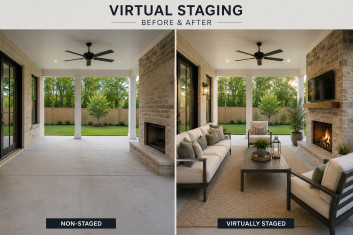
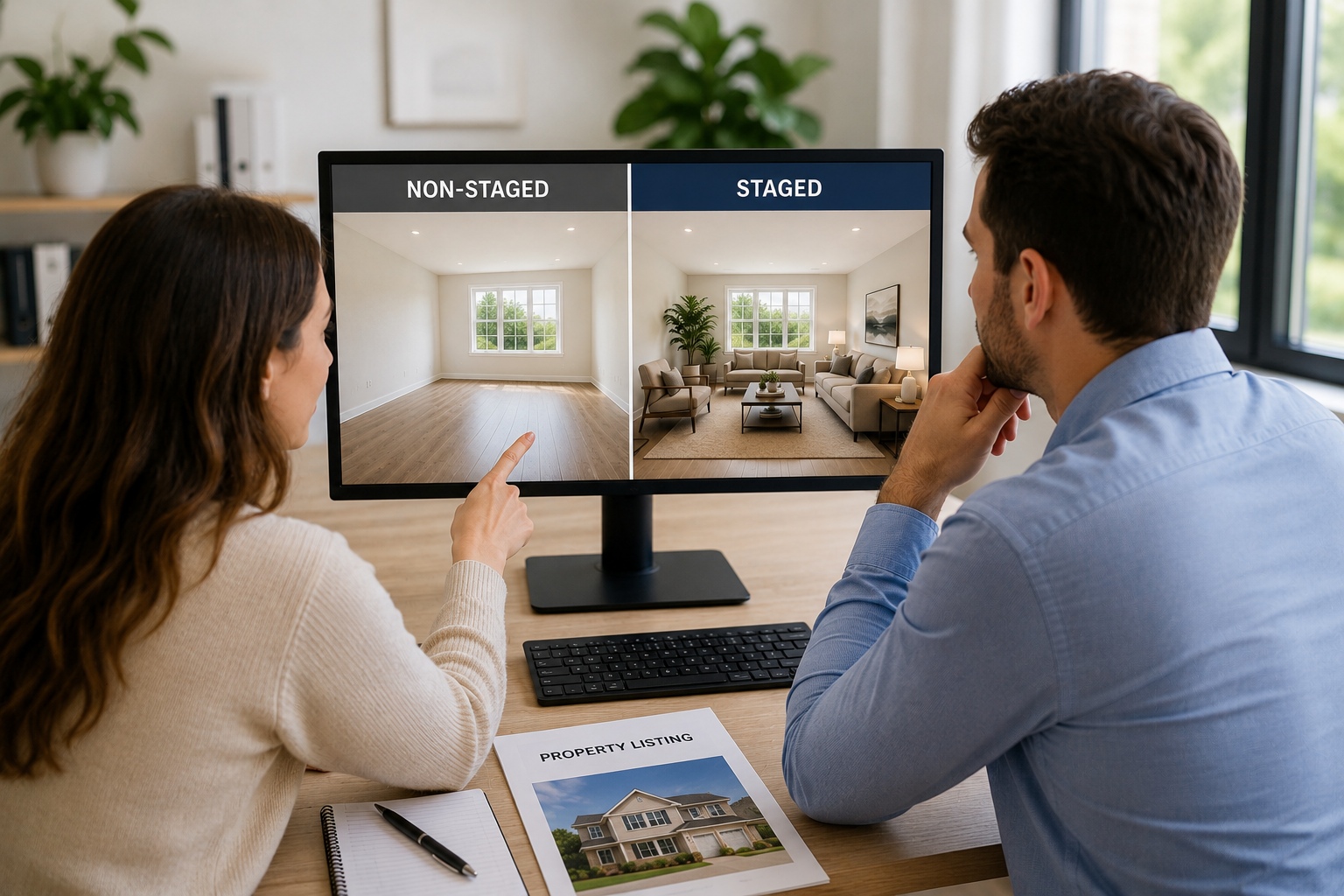
Our article Virtual Staging Before and After Does It Make a Difference showcases side-by-side examples that demonstrate how professionally staged interiors can transform buyer perception without altering the home’s actual features.
Virtual Staging Helps Buyers Focus on the Home
One of the biggest advantages of virtual staging is that it directs buyers’ attention toward the home’s strengths.
Rather than concentrating on empty walls or wondering how furniture might fit, buyers begin noticing:
- Open floor plans.
- Natural lighting.
- Hardwood flooring.
- High ceilings.
- Large windows.
- Architectural details.
- Spacious layouts.
Thoughtfully selected furniture provides context without distracting from the property’s design.
When staging is realistic and professionally executed, buyers appreciate the home’s potential while still seeing its true size and layout.
Virtual Staging Is an Affordable Marketing Advantage
Traditional home staging requires moving furniture into the property, arranging décor, and often paying ongoing rental fees until the home sells.
Virtual staging offers many of the same marketing advantages at a fraction of the cost.
It also allows agents to present vacant homes quickly without coordinating deliveries, installations, or furniture removal.
Different furnishing styles can even be created to appeal to different buyer demographics, giving agents greater flexibility in their marketing strategy.
For vacant listings, this makes virtual staging one of the most cost-effective visual marketing tools available.
Local Expertise Enhances the Final Presentation
Understanding local buyer preferences helps create staging that feels appropriate for the market.
The furniture style that appeals to buyers in one region may not be the best choice elsewhere.
Experienced real estate photographers and editors understand local architecture, neighborhood trends, and buyer expectations.
Whether marketing family homes, luxury properties, investment homes, or condominiums, choosing furnishings that complement the property’s style creates a more authentic presentation.
If you’re marketing homes throughout Louisiana, combining professional photography with our Baton Rouge real estate photography services helps produce polished listing images that showcase each home’s full potential while appealing to local buyers.
Conclusion
Home buying is driven by both logic and emotion.
While buyers certainly evaluate practical considerations, they also imagine how life might feel inside the home.
Professionally furnished spaces create that emotional connection by helping buyers visualize everyday living.
Professional virtual staging for vacant homes, combined with high-quality photography, transforms empty interiors into warm, inviting spaces that encourage buyers to engage with listings, schedule showings, and remember the property long after they finish browsing online.
For agents, brokers, homeowners, investors, and developers, virtual staging remains one of the most effective ways to create stronger first impressions and improve real estate marketing.