 844.883.2483
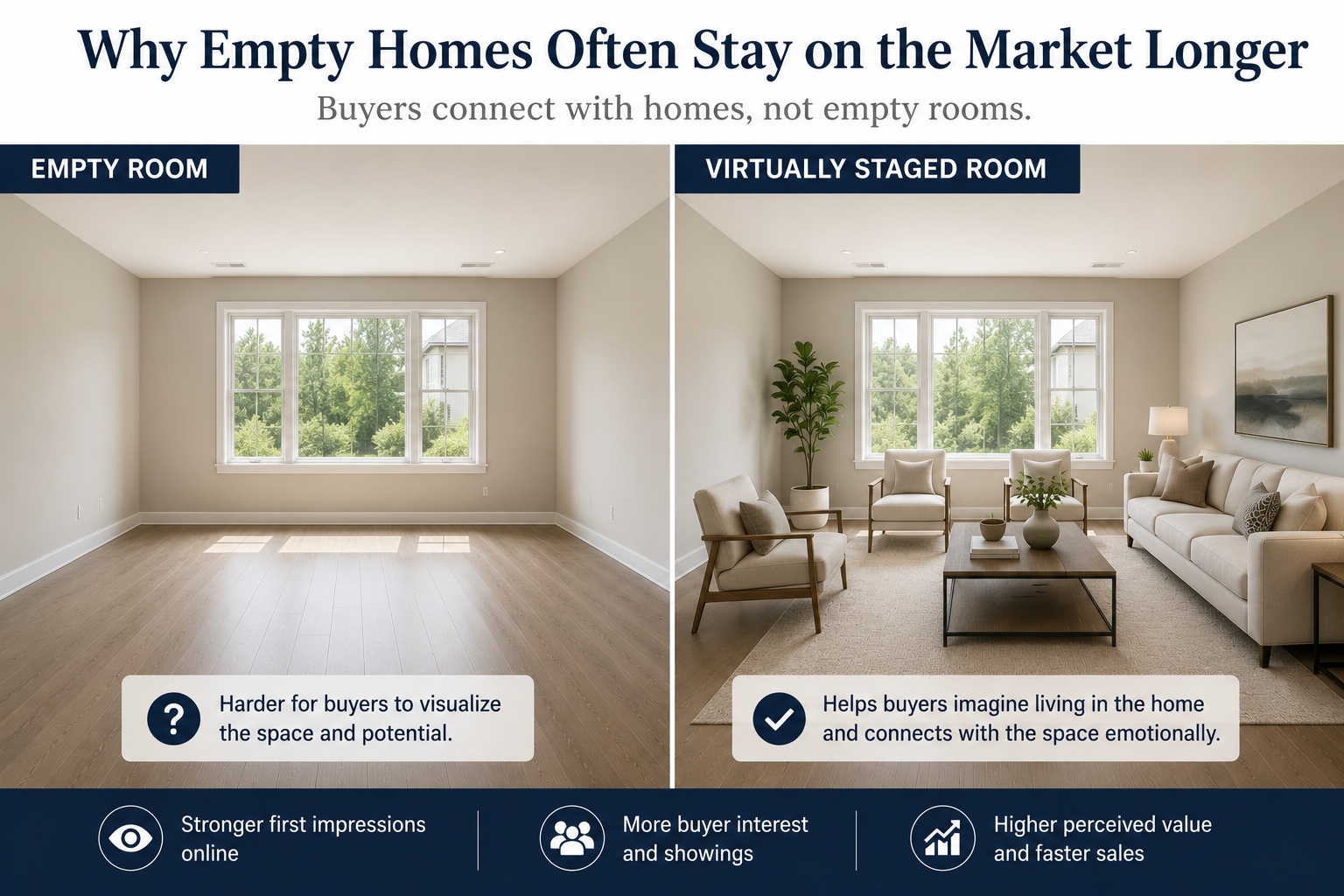
Selling a vacant property presents unique marketing challenges. While an empty home may be clean, freshly painted, and move-in ready, buyers often struggle to connect emotionally with unfurnished spaces. Since most buyers begin their search online, the listing photos become the first opportunity to make a positive impression.
Professional virtual staging has become one of the most effective ways to help buyers visualize the potential of an empty property. By digitally furnishing vacant rooms, agents can create warm, inviting images that encourage buyers to spend more time viewing a listing and ultimately schedule a showing.
Why Empty Homes Feel Less Inviting
An empty house often lacks personality.
Without furniture, artwork, lighting, rugs, and décor, rooms can appear cold and unwelcoming.
Although buyers understand the home is vacant, many still find it difficult to picture everyday life inside the space.
Instead of imagining family dinners, relaxing evenings, or entertaining guests, they simply see empty walls and bare floors.
Professional virtual staging for vacant homes helps transform these blank spaces into inviting environments that allow buyers to emotionally connect with the property.
The Psychology Behind Buyer Perception
Buying a home is an emotional decision as much as a financial one.
Buyers naturally imagine themselves living in a property before they begin comparing practical details like square footage or storage space.
When rooms are furnished appropriately, buyers can more easily picture where the sofa would go, how the dining room might be used, or how comfortable the primary bedroom could feel.
This emotional connection plays an important role in generating buyer interest.
Our article How Buyers Emotionally Respond to Furnished Spaces explores why professionally staged rooms often create stronger first impressions than vacant interiors.
Why Vacant Rooms Often Look Smaller
One common misconception is that empty rooms appear larger.
In reality, the opposite is often true.
Without furniture to provide scale, buyers frequently underestimate room sizes or have difficulty understanding how the space can be used.
Questions begin to arise:
- Will my sectional fit?
- Is the dining room large enough?
- How should this extra room be used?
- Is there enough space for a home office?
Virtual staging answers many of these questions by placing appropriately sized furniture within each room.
Instead of guessing, buyers immediately understand the function and proportions of the space.
The Challenges of Marketing an Empty Property
Vacant homes often face several marketing disadvantages.
These include:
- Less engaging listing photos.
- Lower emotional appeal.
- Difficulty demonstrating room purpose.
- Buyers focusing on imperfections instead of possibilities.
- Less memorable online presentations.
- Increased competition from professionally staged listings.
Because buyers scroll through dozens of listings online, visually appealing photographs become increasingly important.
Properties that immediately capture attention are more likely to receive clicks, inquiries, and showings.
Our article Virtual Staging Before and After Does It Make a Difference demonstrates just how dramatically professional staging can transform the appearance of vacant interiors.
How Virtual Staging Changes Buyer Perception
Virtual staging allows buyers to see the home’s potential instead of its emptiness.
Tastefully selected furniture, décor, rugs, lighting, and artwork create realistic living spaces while maintaining the home’s true dimensions.
Professional staging also helps highlight architectural features such as fireplaces, large windows, open floor plans, and vaulted ceilings.
Instead of distracting buyers, the furnishings guide their attention toward the property’s strongest selling points.
Virtual staging is especially valuable for:
- Vacant resale homes.
- New construction.
- Investment properties.
- Luxury homes.
- Rental properties.
- Recently renovated homes.
- Estate sales.
Our guide How Virtual Staging Helps Buyers Visualize a Home explains why professionally staged images make it easier for buyers to imagine themselves living in the property.
Professional Photography Makes Virtual Staging Even More Effective
Virtual staging always begins with high-quality photography.
Professional photographers capture clean compositions, balanced lighting, and accurate room dimensions that provide the perfect foundation for realistic digital staging.
At Fotosold, we believe virtual staging works best when combined with professional photography.
High-quality images allow editors to place furniture naturally while maintaining realistic proportions, lighting, and perspective.
Professional photography also ensures buyers see the home at its absolute best before they ever schedule a showing.
Which Rooms Should Be Virtually Staged First?
Not every room needs to be virtually staged.
If the marketing budget is limited, focus on the rooms that have the greatest influence on buyer decisions.
These typically include:
- Living room.
- Primary bedroom.
- Kitchen.
- Dining room.
- Family room.
- Home office.
These are the spaces where buyers spend the most time imagining their future lifestyle.
Professionally staged images help establish the overall feel of the home while making the entire property appear more complete.
Our article Which Rooms Should Always Be Virtually Staged First explains how prioritizing the most important rooms can maximize the return on your marketing investment.
Virtual Staging Helps Listings Stand Out
Most buyers begin their home search online.
As they scroll through dozens—or even hundreds—of listings, they make quick decisions based largely on the first few photographs.
Vacant rooms often blend together because they lack visual interest.
Professionally staged rooms immediately capture attention by adding warmth, color, texture, and purpose.
Rather than seeing an empty shell, buyers see a home that feels comfortable, functional, and move-in ready.
This stronger first impression often encourages buyers to continue browsing the listing, increasing the chances of scheduling a showing.
Virtual Staging Is Cost-Effective
Traditional home staging can be expensive.
It typically involves furniture rental, delivery, setup, removal, and ongoing rental fees.
For vacant homes that may remain on the market for several weeks or months, these costs can add up quickly.
Virtual staging provides a practical alternative.
Because furnishings are added digitally, homeowners and agents receive many of the visual benefits of traditional staging without the logistical challenges or ongoing expenses.
It also allows multiple design styles to be created for different target buyers without physically moving furniture.
Professional Photography Enhances Every Stage
Virtual staging is only as effective as the photographs it begins with.
Professionally photographed interiors provide clean lines, balanced lighting, and accurate room proportions that make virtual furniture appear natural and realistic.
High-quality photography also helps buyers appreciate architectural details such as:
- Hardwood flooring.
- Large windows.
- Vaulted ceilings.
- Fireplaces.
- Built-in shelving.
- Open floor plans.
- Natural lighting.
When professional photography and virtual staging are combined, buyers see polished, inviting spaces that are easy to imagine living in.
Local Expertise Makes a Difference
Different markets respond to different design styles.
Experienced real estate photographers understand local buyer preferences and know how to present homes in ways that resonate with their target audience.
Whether photographing downtown condominiums, suburban family homes, luxury residences, or investment properties, local expertise helps create marketing materials that generate stronger buyer engagement.
If you’re marketing homes throughout Illinois, combining professional photography with our Chicago real estate photography services helps produce polished listing images that showcase every property’s full potential.
Conclusion
Vacant homes often remain on the market longer because buyers struggle to form an emotional connection with empty rooms.
Without furniture to demonstrate scale, function, and lifestyle, many buyers find it difficult to imagine themselves living in the home.
Professional virtual staging for vacant homes solves this challenge by transforming empty spaces into inviting interiors that highlight the property’s best features while helping buyers visualize everyday living.
Combined with professional photography, virtual staging creates stronger first impressions, improves online engagement, and gives listings a competitive advantage in today’s real estate market.